
Who is Mojtaba Khamenei, Iran's new Supreme Leader?
 Moderated by Tomas Kauer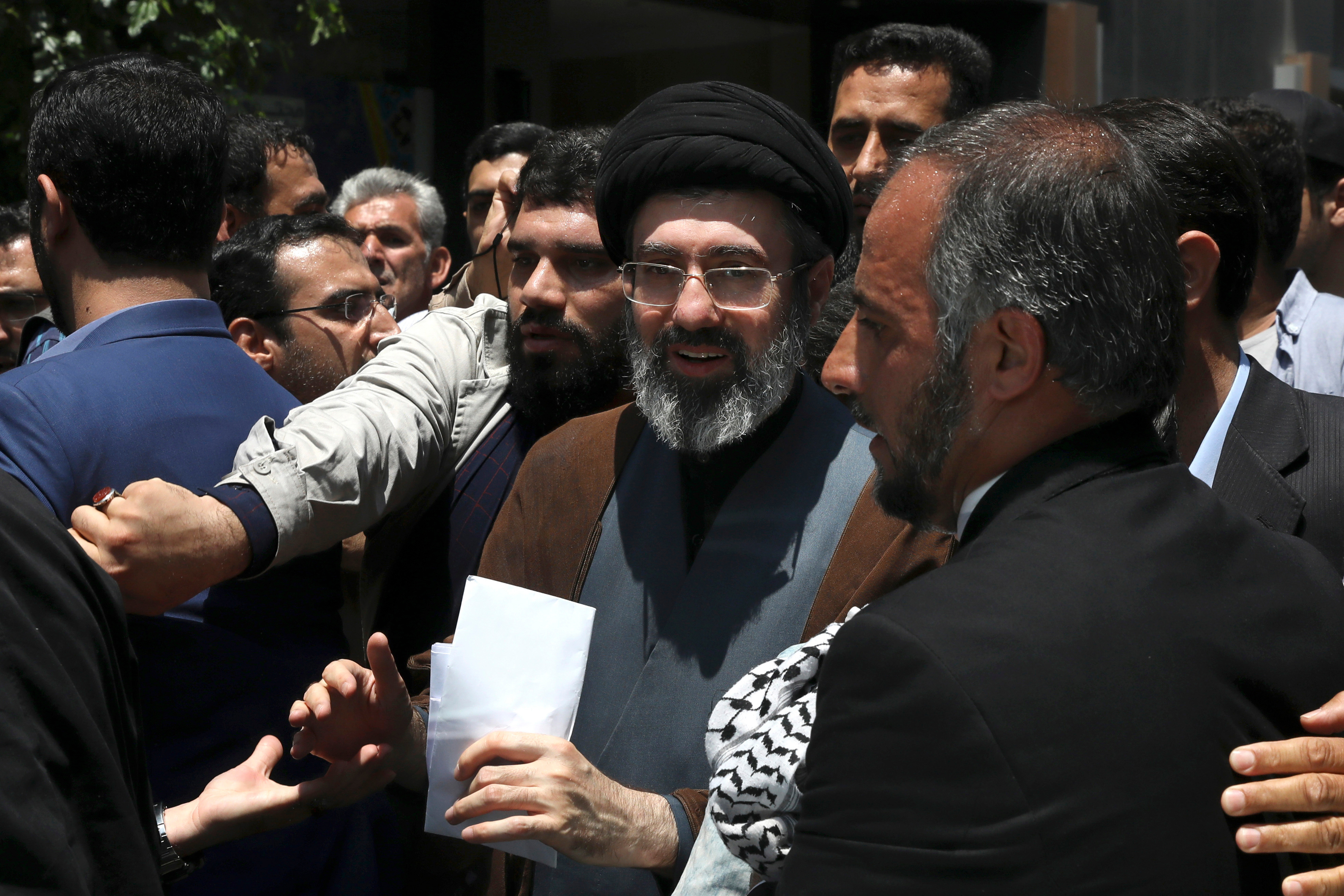
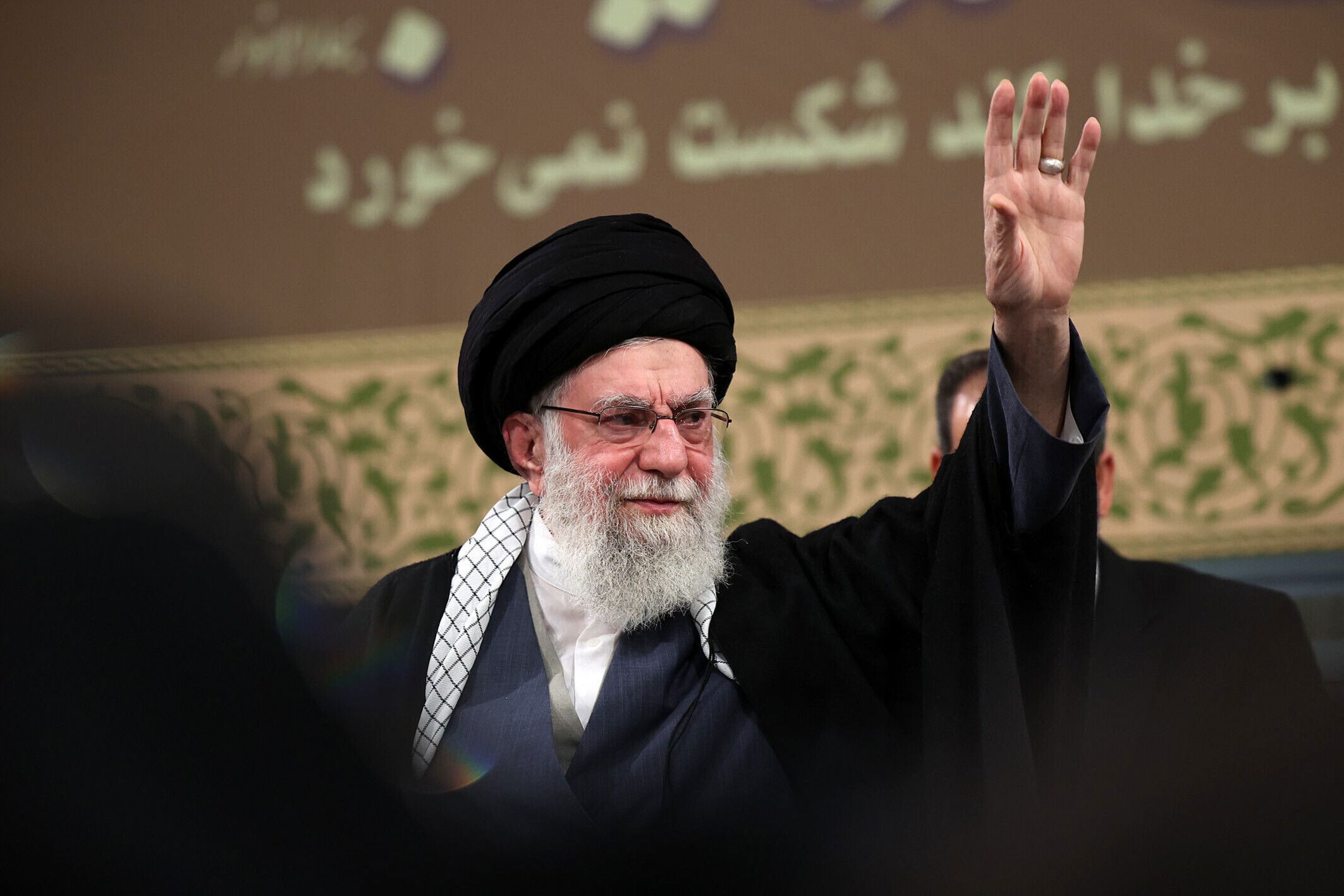
Mojtaba Khamenei, a son of Iran's late Supreme Leader Ayatollah Ali Khamenei, has been named as his successor, Iranian state television has announced.
The younger Khamenei had long been considered a contender, even before an Israeli strike killed his father at the start of the war, and despite never being elected or appointed to a government position.

A secretive figure within the Islamic Republic, Khamenei has not been seen publicly since Saturday, when the Israeli airstrike targeting the supreme leader's offices killed his 86-year-old father. Also killed were the younger Khamenei's wife, Zahra Haddad Adel, who came from a family long associated with the country's theocracy.
READ MORE: 'Apocalyptic' scenes as Iran's capital pummeled by air strikes
Iran's powerful paramilitary Revolutionary Guard answers to the supreme leader, and now Khamenei will have the central say in war strategy.
The announcement came on the ninth day of the war and after signs of a rift among Iranian officials as the country awaited a decision by the 88-seat Assembly of Experts, a group of clerics that selects Iran's supreme leader.
US President Donald Trump told ABC News over the weekend he wants a say in who comes to power once the war is over; a new leader "is not going to last long" without his approval, Trump added.
"Khamenei's son is unacceptable to me," Trum had seaid earlier. "We want someone that will bring harmony and peace to Iran."
WATCH: Fire tears through tower amid 'wave of hostile drones'
Profile of Mojtaba Khamenei rises after airstrike
Khamenei will now gain control of an Iranian military now at war and a stockpile of highly enriched uranium that could be used to build a nuclear weapon, should he choose to decree it.
Khamenei had occupied a similar role to that of Ahmad Khomeini, a son of Iran's first Supreme Leader Ruhollah Khomeini, which was "a combination of aide-de-camp, confidant, gatekeeper and power broker," according to United Against Nuclear Iran, a U.S.-based pressure group.
And US President Donald Trump may have indirectly boosted his candidacy by criticizing Khamenei in an interview with news website Axios on Thursday and insisting he be involved in selecting Iran's next leader.
"They are wasting their time. Khamenei's son is a lightweight. I have to be involved in the appointment," Trump said, referring to his operation that saw the US military seize former Venezuelan leader Nicolás Maduro.
READ MORE: 'Frightening' impact for farmers as Middle East fighting continues
"Khamenei's son is unacceptable to me," Trump added. "We want someone that will bring harmony and peace to Iran."
Born into dissent
Born in 1969 in the city of Mashhad, some 10 years before the 1979 Islamic Revolution that would sweep Iran, Khamenei grew up as his father agitated against Shah Mohammad Reza Pahlavi.
An official biography on Ali Khamenei's life recounts one moment when the shah's secret police, the SAVAK, broke into their home and beat the cleric. Woken up after, Mojtaba and the rest of Khamenei's children were told their father was going on vacation.
"But I told them, 'There is no need to lie.' I told them the truth," the elder Khamenei was quoted as saying.
After the fall of the shah, Khamenei's family moved to Tehran, Iran's capital. Khamenei would go on to fight in the Iran-Iraq war with the Habib ibn Mazahir Battalion, a division of Iran's paramilitary Revolutionary Guard that would see several of its members ascend to powerful intelligence positions within the force, likely with the backing of the Khamenei family.
His father became supreme leader in 1989, and soon Mojtaba Khamenei and his family had access to the billions of dollars and business assets spread across Iran's many bonyads, or foundations, funded from state industries and other wealth once held by the shah.
Power rises
His own power rose alongside his father's, working within his offices in downtown Tehran. US diplomatic cables published by WikiLeaks in the late 2000s began referring to the younger Khamenei as "the power behind the robes."
One recounted an allegation that Khamenei actually tapped his own father's phone, served as his "principal gatekeeper" and had been forming his own power base within the country.
READ MORE: Trump downplays importance of Russia reportedly sharing intel with Iran
Khamenei "is widely viewed within the regime as a capable and forceful leader and manager who may someday succeed to at least a share of national leadership; his father may also see him in that light," a 2008 cable read, also noting his lack of theological qualifications and age.
"Mojtaba is, however, due to his skills, wealth, and unmatched alliances, reportedly seen by a number of regime insiders as a plausible candidate for shared leadership of Iran upon his father's demise, whether that demise is soon or years in the future," it said.
Khamenei has worked closely with Iran's paramilitary Revolutionary Guard, both with commanders of its expeditionary Quds Force and its all-volunteer Basij that violently suppressed nationwide protests in January, the US Treasury has said.
The United States sanctioned him in 2019 during Trump's first term over working to "advance his father's destabilizing regional ambitions and oppressive domestic objectives."
That includes allegations that Khamenei from behind the scenes supported the election of hard-line President Mahmoud Ahmadinejad in 2005 and his disputed re-election in 2009 that sparked the Green Movement protests.
Mahdi Karroubi, who was a presidential candidate in 2005 and 2009, denounced Khamenei as "a master's son" and alleged he interfered in both votes. His father reportedly at the time said Khamenei was "a master himself, not a master's son."
READ MORE: Trump blasts UK for 'finally' considering deploying aircraft carriers
Powers of supreme leader at stake
There has been only one other transfer of power in the office of supreme leader of Iran, the paramount decision-maker since the Islamic Revolution. Ayatollah Ruhollah Khomeini died at age 86 after being the figurehead of the revolution and leading Iran through its eight-year war with Iraq.
Now the new leader will come on board after the 12-day war with Israel and as a U.S.-Israeli war with Iran is seeking to eliminate Iran's nuclear threat and military power, hoping also the Iranian people will rise up against the Iranian theocracy.
The supreme leader is at the heart of Iran's complex power-sharing Shiite theocracy and has final say over all matters of state. He also serves as the commander-in-chief of the country's military and the Guard, a paramilitary force that the United States designated a terrorist organization in 2019, and which his father empowered during his rule.
The Guard, which has led the self-described "Axis of Resistance," a series of militant groups and allies across the Middle East meant to counter the U.S. and Israel, also has extensive wealth and holdings in Iran. It also controls the country's ballistic missile arsenal.